Arborists can act like Batman and quickly ascend and descend ropes using a friction hitch. A friction hitch is a knot used in climbing to attach one rope to another or a carabiner. In a climbing situation, the climber ties into the carabiner. All friction hitches are based on the simple Prussik, and many friction hitches exist, including the Klemheist, Blakes Hitch, Valdotain Tresse, Bachman, Distel, and Schwabich.
These knots are relatively new. Born in Austria in 1896, Karl Prussik created over 70 new climbing routes in the Austrian Alpine Club. The Prussik was shown in a 1931 Austrian mountaineering manual for rope ascending. The effectiveness of the Prusik hitch relies on the surface area between the hitch and the main line and the diameter of the cord used.
Typically, the greater the difference between the diameter of the cord used for the hitch and the main line, the greater the hitch’s ability to hold. However, the smaller the cord diameter, the lower its safe working load. In addition, smaller-diameter cords often jam too tightly when placed under load and are hard to handle when wearing gloves.
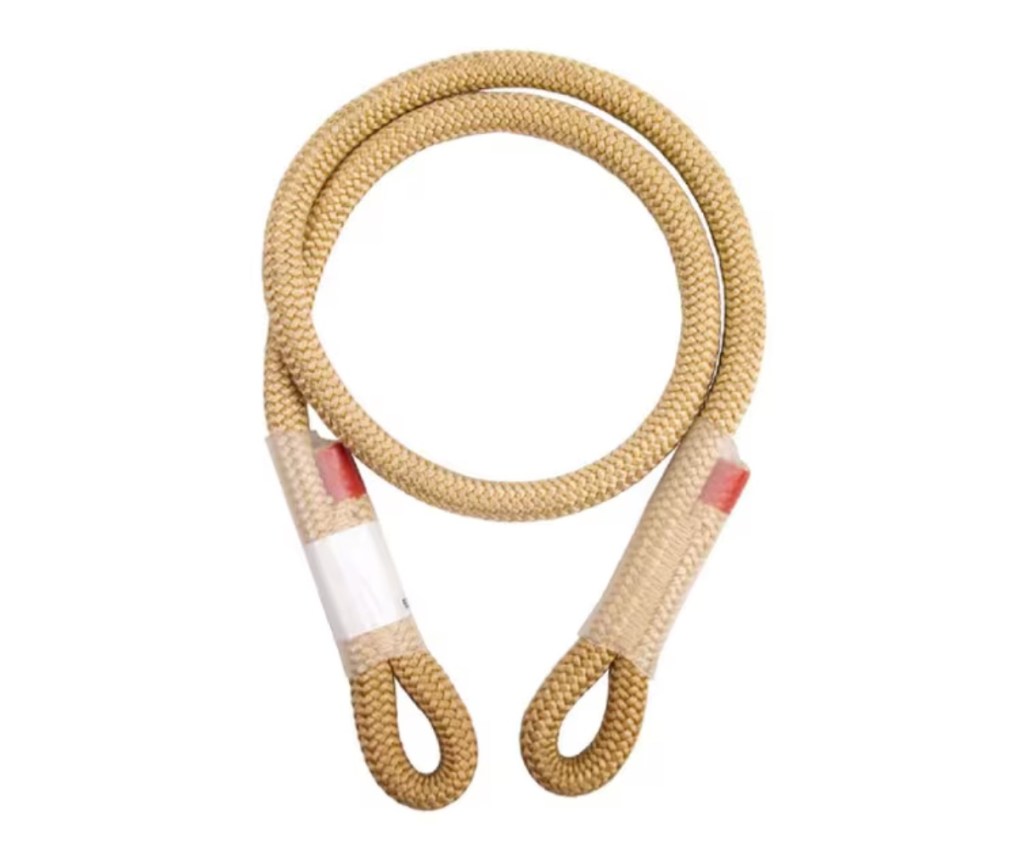
A prussik is tied using a split tail. A short piece of rope, about 30 inches long, with a stitched eye on each end. Using both ends of the split tail makes friction more evenly distributed, resulting in more consistent friction through a less binding knot, yet grabs quite firmly. The structure of these knots is similar in that they all have a “barrel.” The barrel is a series of wraps around the main line. Both legs of the split tail are terminated on a carabiner, thus forming a closed climbing hitch. When incorporated with a micropulley that fair-leads the hitch for one-handed slack tending, the system is significantly enhanced.
Prusik Hitch
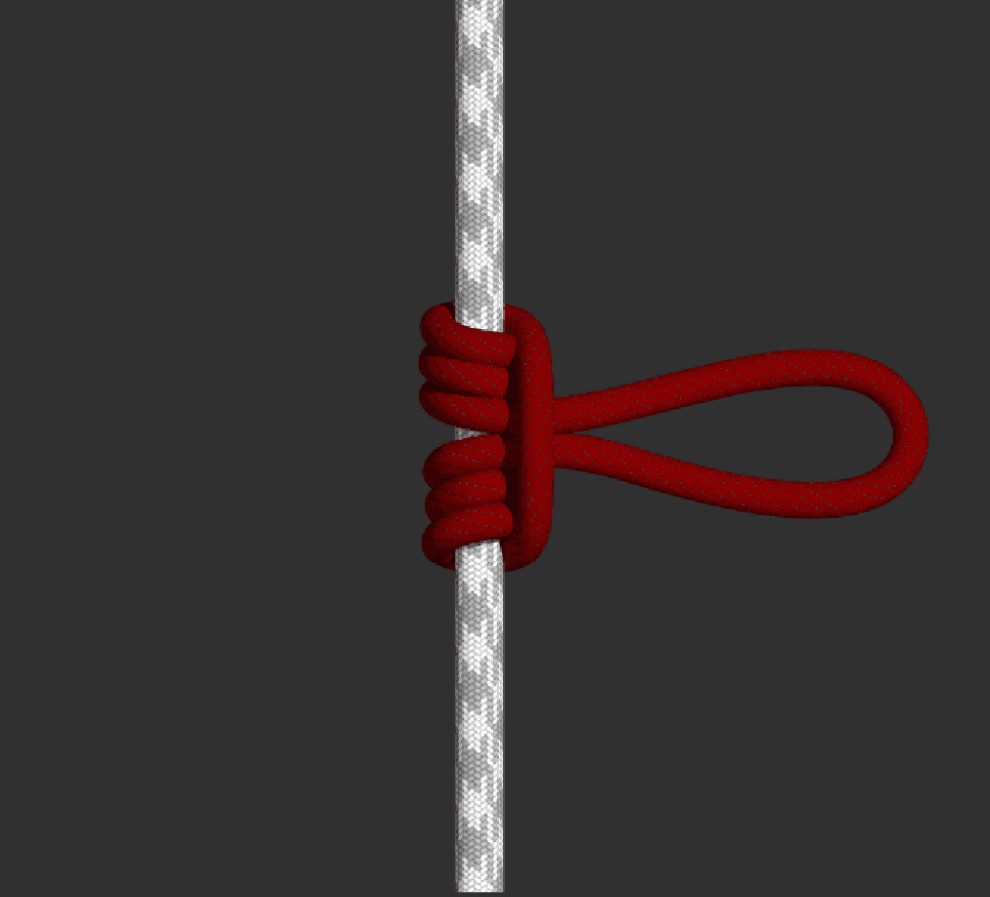
To tie a Prussik, wrap the tail of the split tail around the main line several times—the more wraps, the more friction; the less wraps, the less friction. Begin at the middle of the split tail behind the main line. Girth hitch the tails around the main line and through the loop of the cord to create a barrel, several wraps on top of each other. Typically, two wraps are enough. Unlike most friction hitches, the simple Prussik is dual-directional. Pull the main line through the Prussik holding the top of the wraps. When the tail is weighted, the turns tighten and slightly bend the rope. When weight is removed, the loop can be moved along the rope by placing a hand directly on the barrel.
Blakes Hitch
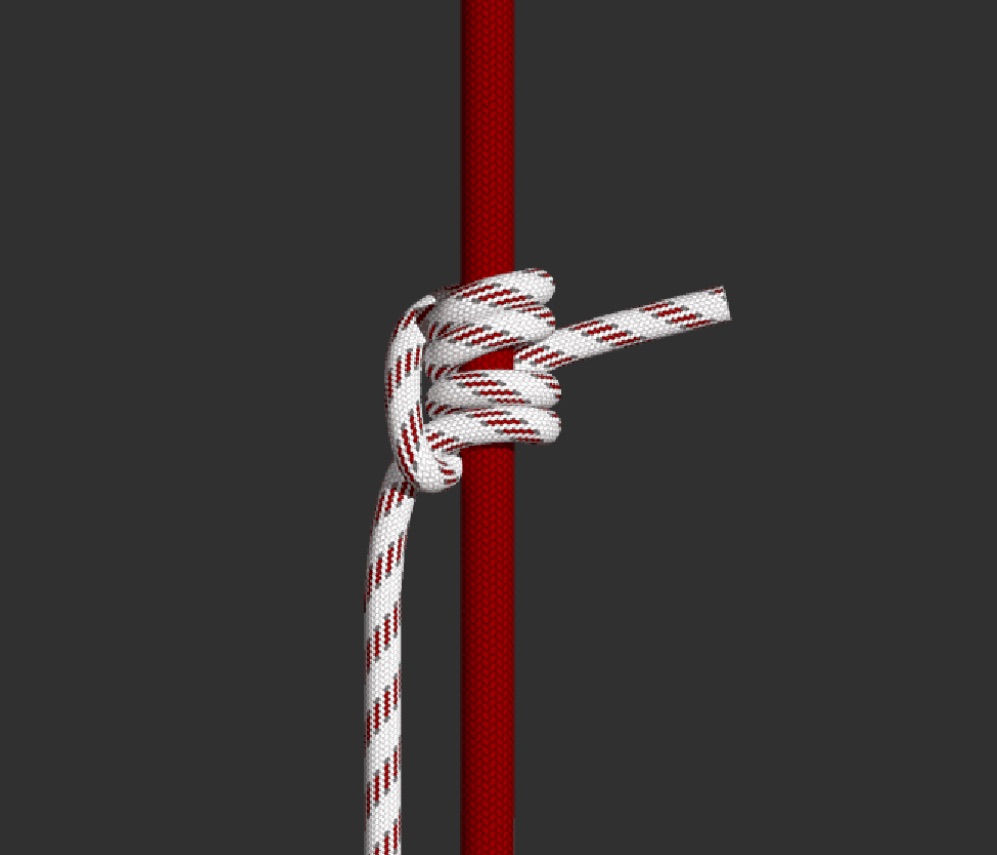
Unlike other common climbing hitches, which often use a split tail, the Blake’s hitch is formed using the end of the main climbing line. Created in 1981 by Austrian climber Heinz Prohaska, Jason Blake popularized it in the arborist community in 1994. Because Blake was the first to describe this knot to arborists, the knot was shown as a Blake’s hitch at various tree industry trade shows. It was described again in Arbor Age magazine by Smith in 1996, but the accompanying photograph showed the knot tied incorrectly. Oddly enough, Blake’s original letter to the editor had cautioned against using the pictured version of the knot, which he dubbed a “sui-slide” knot. Blake’s hitch appeared simultaneously in Arborist News magazine.
This is helpful for “double-tying in,” a climbing technique that uses two main lines if you only have one split tail. This is the knot we train new climbers on.
Valdotain Tresse
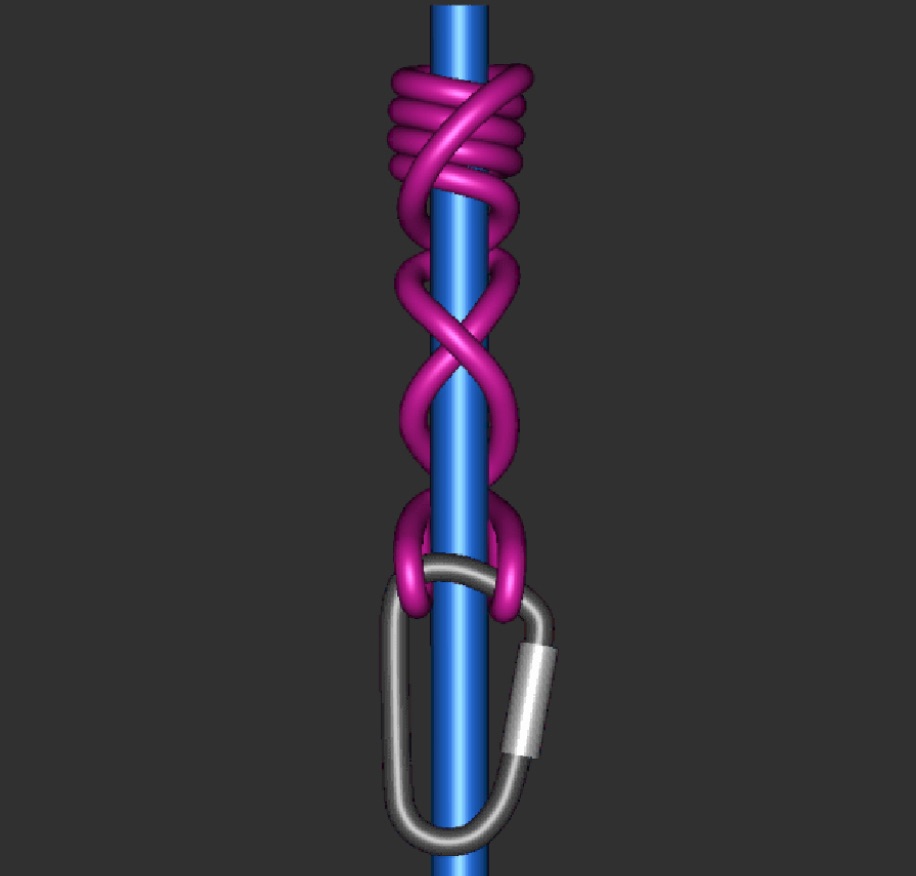
Also known as a French Prussik, the word “tresse” is French for braided and indicates a final crossing turn that increases the knot’s hold and ease of release. An April 1998 issue of Arborist News introduced this new climbing hitch to American climbers and was the first formal mention of French Prusik in the tree industry. The Army Field Manual (1995) calls it a telegraph hitch and shows it inverted—presumably because the Army used it for raising and lowering telegraph poles.
This hitch does not grip the rope adequately.
Schwabich Prusik
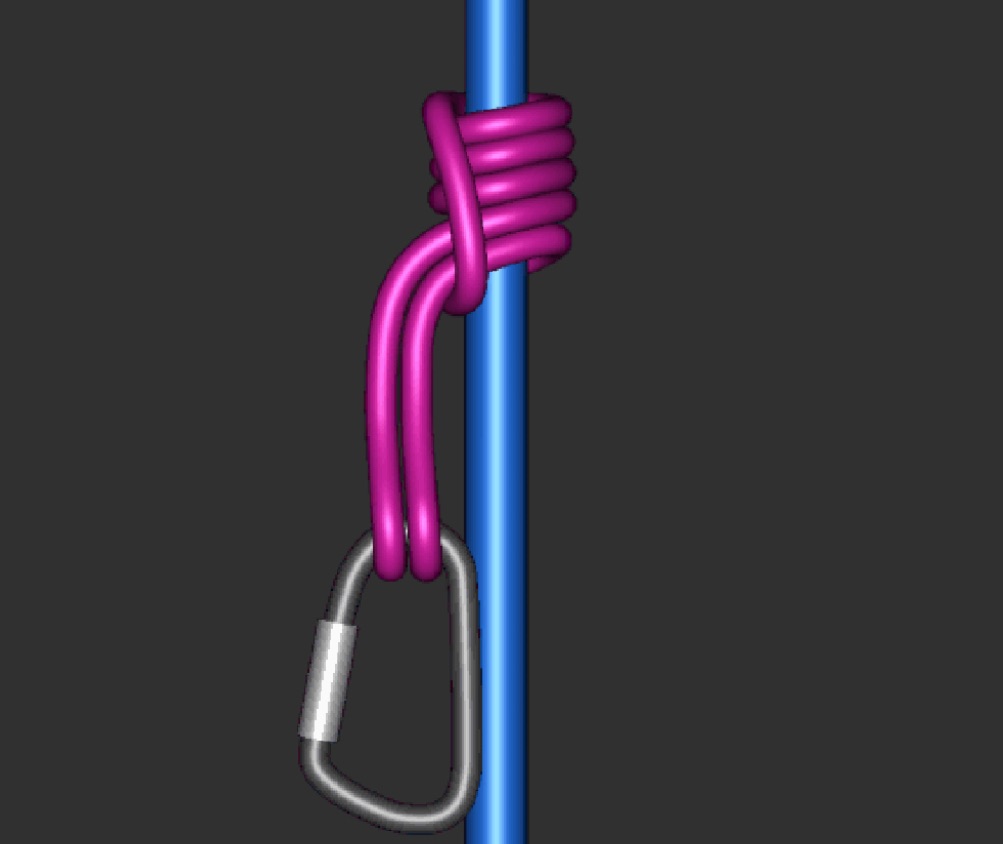
Also known as an asymmetric Prussic, the Schwabich was first documented in 1998 by Bernd Strasser in an issue of Arborist News. The two legs of the split tail exit the hitch at the bottom rather than the middle of the knot. More coils in the top of the knot make it hold better in a downward pull.
The Schwabich is my preferred knot for my buck strap and main climbing line. It bites the rope and doesn’t jam easily.
Distel Prusik
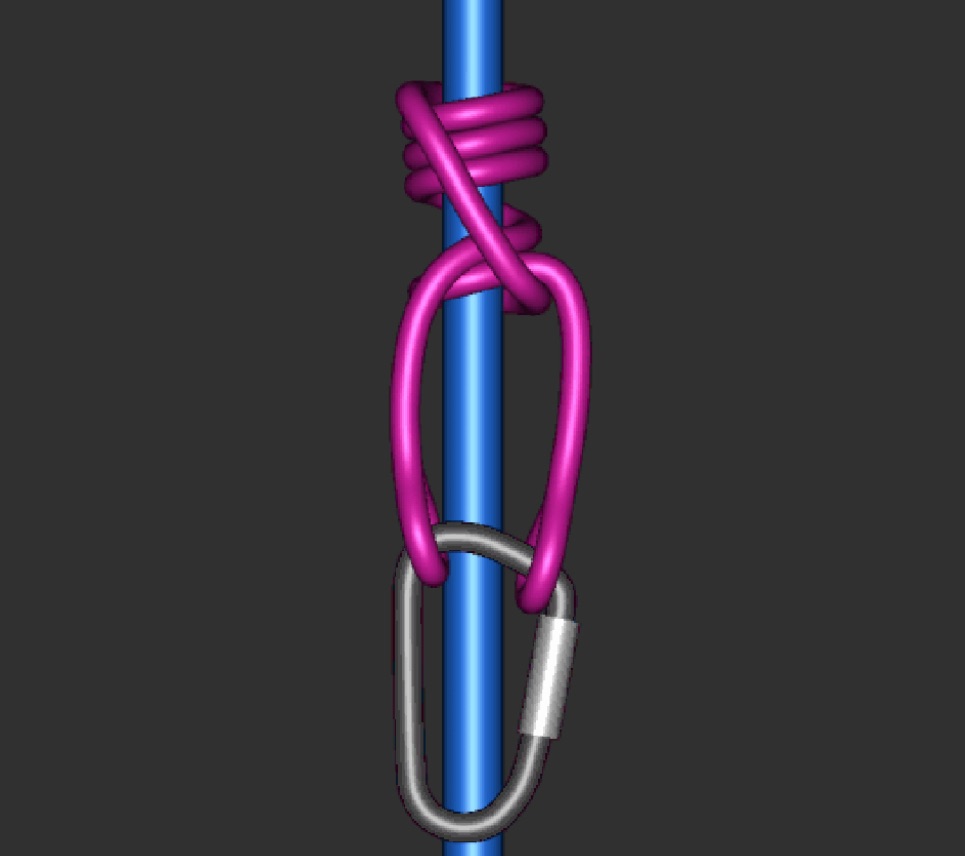
Arbor lore has it that a German climber named Uli Distel attempted to tie the Schwabisch but neglected to change the direction of the split-tail when he made the turns above the bridge. I included this because of the fun history.
In conclusion
Climbers may need to experiment with different types, lengths, and diameters of split tails. I started on the VT but am now climbing on the Schwabich. So, what do you climb on?
For more information on the genealogy of arborists climbing hitches, follow the link k below.
http://www.paci.com.au/downloads_public/knots/18_Article_Arboriculture_Prusik_2004.pdf


 Joshua Maloney
Leave a reply to dalyprose Cancel reply